
As many of you know, Bali has never truly been my place — there’s just too much overcrowding, traffic and tourism. Also, the kind of tourism Bali attracts makes it feel a bit strange to me — with things like the Bali Swing, staged photo spots, Instagrammable cafes, and overpriced pool clubs being in the main focus. But luckily just an hour’s flight away is an island that does not fail to amaze me: Flores. Most people visit Flores to explore the famous Komodo National Park — which is absolutely amazing — but many forget how much the inland of Flores has to offer. One of those hidden gems is the village of Wae Rebo.
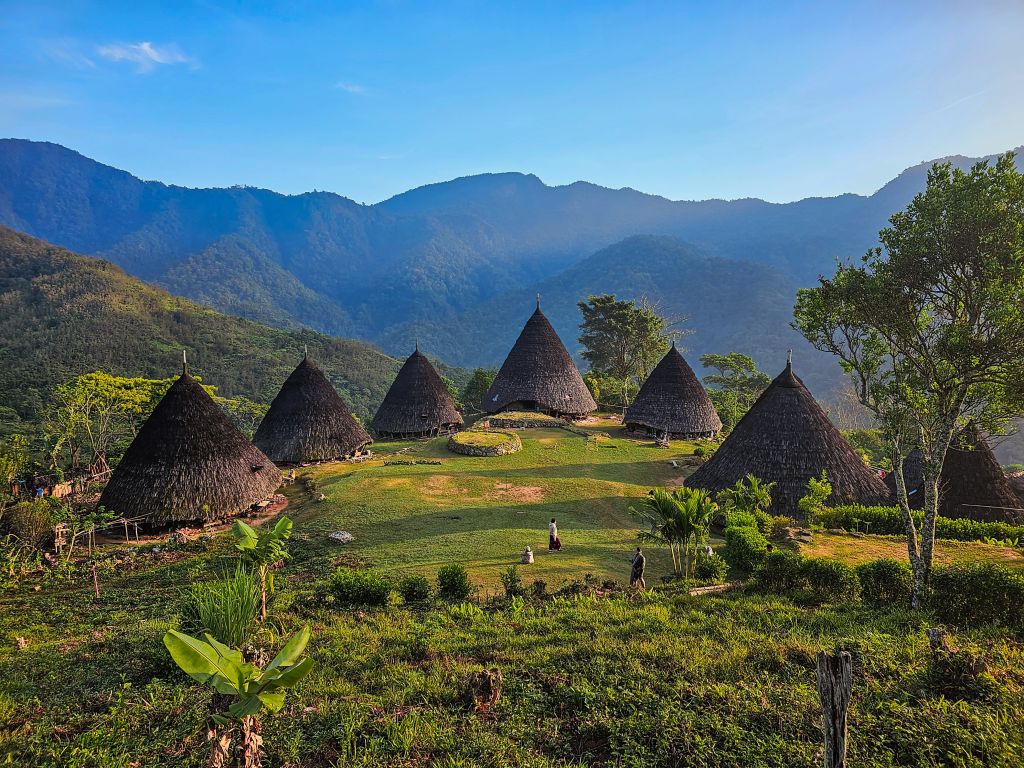
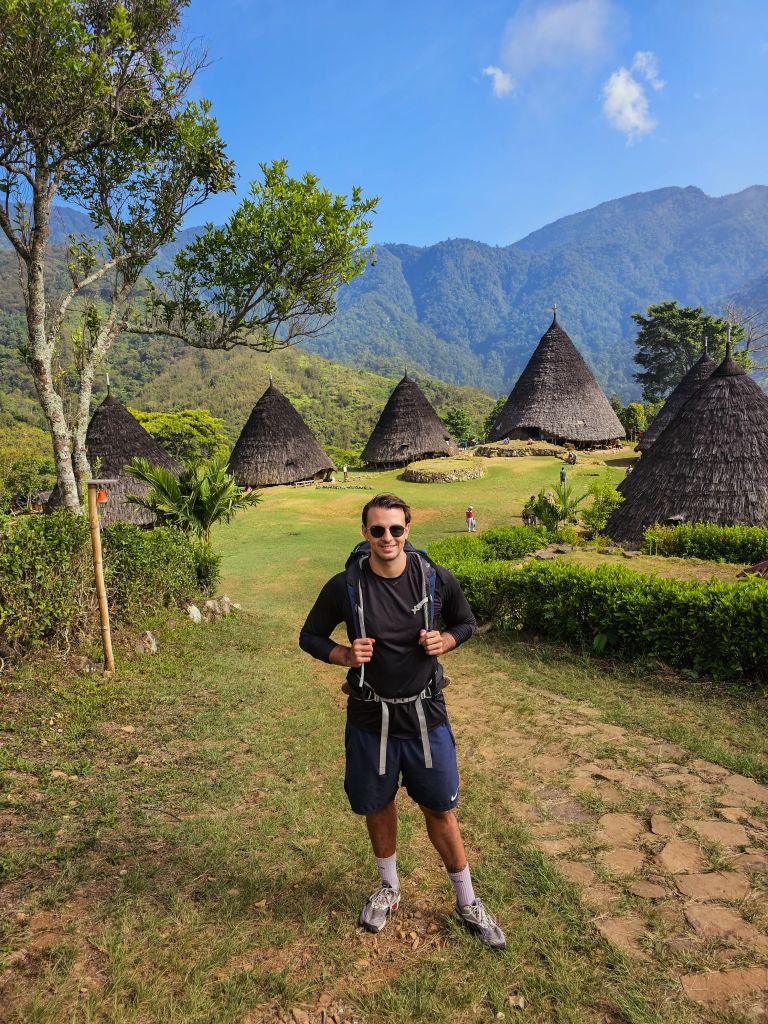
Getting to Wae Rebo takes time and effort — and that’s exactly what makes it so special. From Labuan Bajo, it’s about a four-hour drive through some of the most stunning scenery Indonesia has to offer. Then, the road ends, and the journey continues by a short scooter ride, winding along a narrow trail through even denser greenery. Finally, you lace up your hiking boots and begin a two- to three-hour uphill hike into the misty mountains. The trail is well maintained and not too difficult, but it is pretty steep. And when the forest finally opens up and the village comes into view, it feels like stepping into a hidden world.

Wae Rebo is tucked away high in the cloud-covered hills of southwest Flores, and it looks like it belongs to another era. The first thing you’ll notice is the architecture — seven tall, conical houses with dramatic thatched roofs, perfectly arranged in a semi-circle on a grassy plateau. These traditional homes are called Mbaru Niang, and they’re built entirely by hand using bamboo, palm fiber, and wood — following ancestral techniques passed down for generations. Each house has multiple levels and is shared by several families, with a central hearth where stories, warmth, and meals are shared. The design isn’t just practical — it’s deeply spiritual. Every part, from the roof’s shape to how the beams are tied, has meaning and tradition behind it.

This isn’t a museum or a setup for tourists. Wae Rebo is a living village — home to the Manggarai people, who live in close connection with their land and customs. Life here is simple. The days are slow and guided by nature. Villagers grow their own food, especially coffee, which they roast themselves — a rich, earthy brew you won’t forget. There’s no phone signal, no distractions. Just quiet conversations, bird calls in the distance.
Every visitor is welcomed with a traditional ritual upon arrival — a calm, powerful moment where the village elder asks the ancestors‘ spirits for permission for you to stay. It’s more than a formality; it’s a reminder that you’re entering sacred space, not as a tourist, but as a guest.
Sleeping is communal. You’ll sleep on a simple mat on the floor of one of the Mbaru Niang, alongside other travelers who made the same journey. When we stayed in Wae Rebo, there were around 20 other travelers. Most people who make it here tend to be well-traveled and full of interesting stories. We all ate dinner together — rice, a local vegetable curry, and some eggs.

After a long day, we went to bed early — because one of the highlights was still waiting for us: sunrise over Wae Rebo. Early the next morning, we hiked a little further uphill to watch the sun rise over the beautiful Mbaru Niang rooftops. Soon after, we ate breakfast and then started our journey back — hiking down to the trailhead, taking the short scooter ride through the jungle, and then driving all the way back to Labuan Bajo.
Wae Rebo isn’t for everyone. It’s not comfortable in the typical sense. But it’s incredibly beautiful, deeply human, and quietly transformative. It’s a place where time slows down, the modern world fades away, and you feel — maybe for the first time in a while — truly present.


 Flapsu's Travel Blog
Hinterlasse einen Kommentar