
Of all my travels, few experiences have been as surreal and hauntingly memorable as my journey to the former coastline of the Aral Sea. Once a thriving body of water full of life, it now lies buried under sand, its memory preserved only by rusting ship and windswept silence.

We began our journey in Khiva, setting off on a 3.5-hour drive through the deserted landscapes of western Uzbekistan toward the city of Nukus. This is the capital of Karakalpakstan—an autonomous republic within Uzbekistan—and a place known for its unique culture and history. Our plan was to visit the renowned Savitsky State Museum of Art, famous for its collection of banned Soviet avant-garde pieces. Unfortunately, it was closed that day.
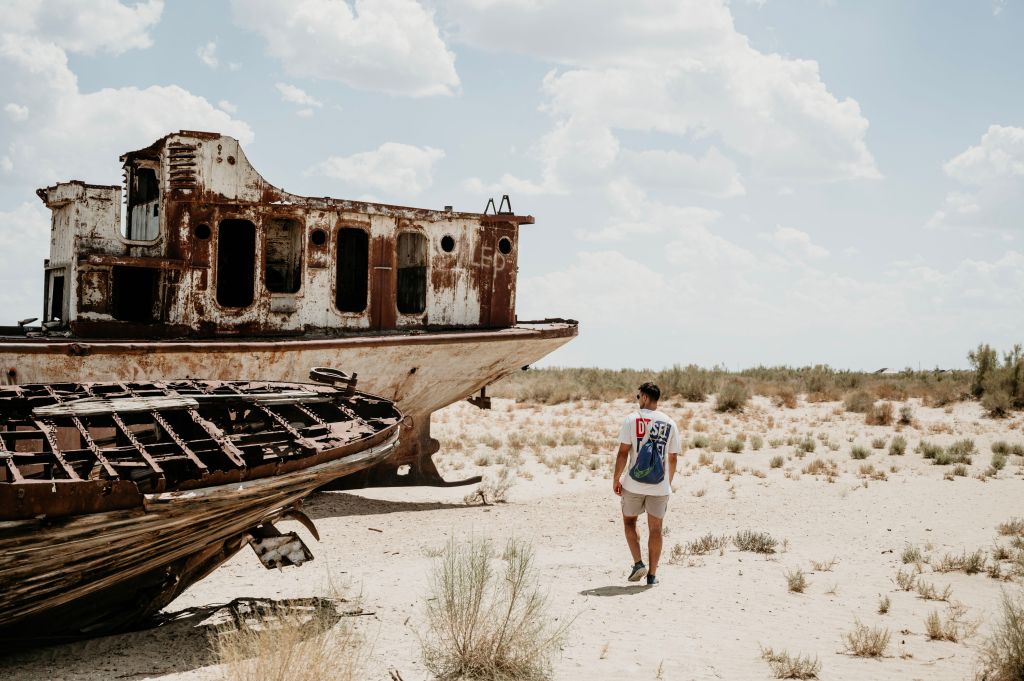
Therefore, after a short coffee break, we continued on to Muynak, a further four-hour drive north. Muynak was once a bustling port town on the southern shore of the Aral Sea. Decades ago, fishing boats lined the shore, factories processed sardines, and the local economy thrived. But in a matter of decades, unsustainable irrigation projects—mainly from Soviet cotton farming—drained the rivers that fed the Aral Sea. The sea retreated. Entire communities were abandoned. Muynak, once a vibrant coastal town, now sits landlocked, surrounded by salt and dust. Today, it’s a shadow of its former self—sparse, weathered, and struggling against the harsh realities left behind by one of the world’s worst environmental disasters.
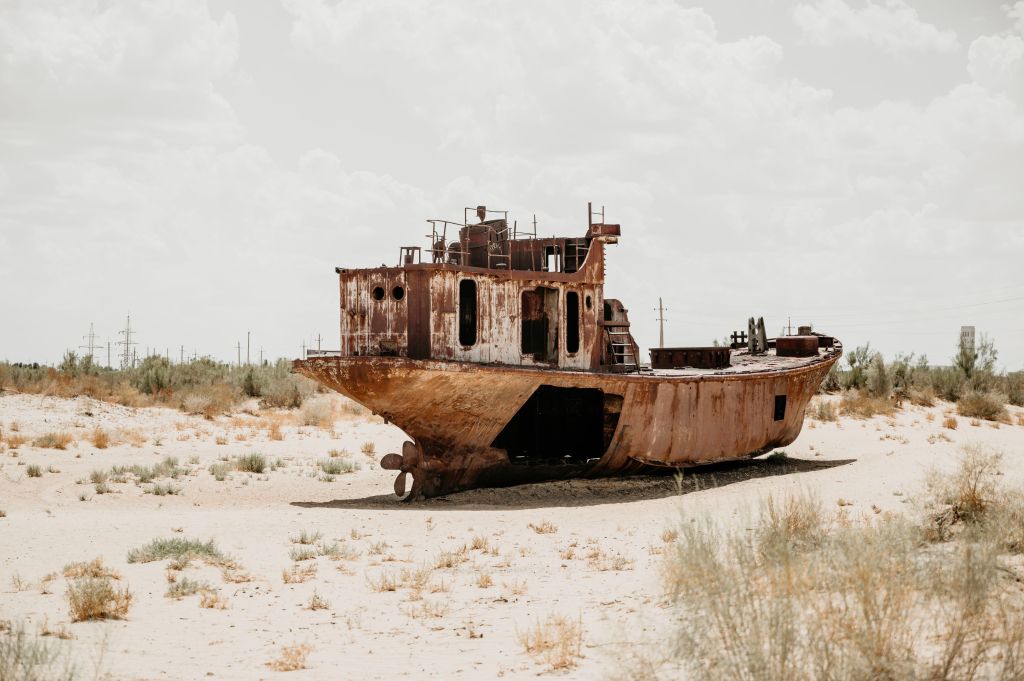
The Aral Sea was once the fourth-largest lake in the world, covering an area of 69,000 km². Until 2018 the surface area of the lake shrank by a staggering 90%!
The desolation is not just visual—it’s physical. The exposed seabed has become a source of toxic dust storms. As the water receded, it left behind not only salt, but also residues of pesticides and industrial chemicals that were used heavily in the Soviet era. These pollutants now mix with the dry soil, and the wind carries them for hundreds of kilometers. The dust contributes to respiratory problems, cancers, and other serious health conditions among the remaining residents of the region. Breathing in this contaminated air has become a daily hazard.
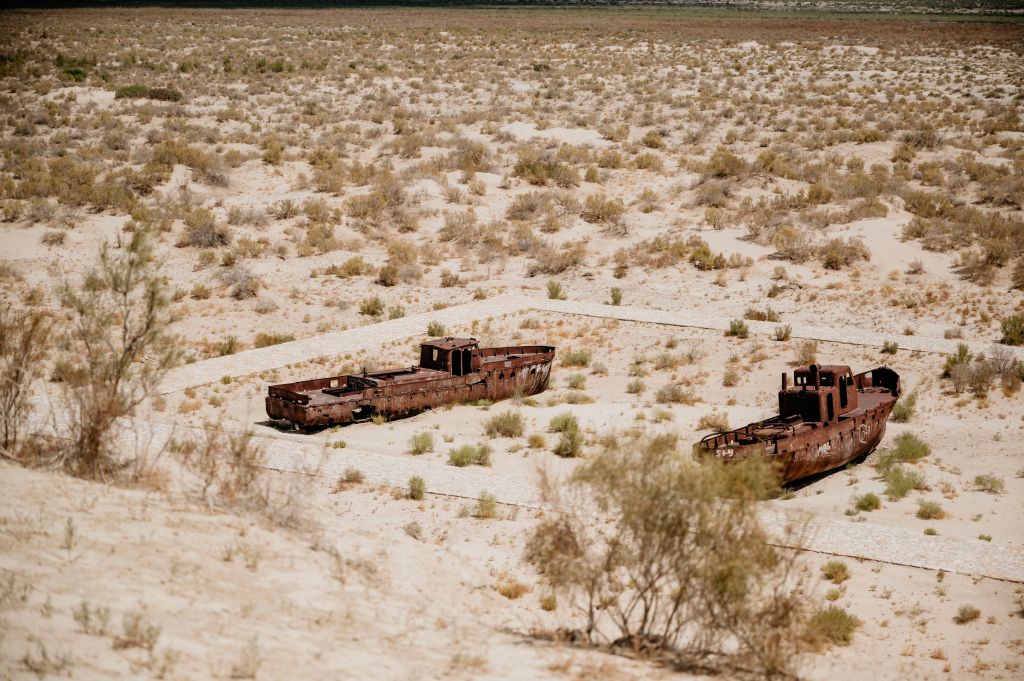
At the old port, we stood in awe among the skeletons of rusted fishing vessels—remnants of a vanished sea. Only a few boats remain on display; many others were long ago scavenged and sold for scrap. Just 40 years ago, this was all water. Adding to the surreal atmosphere was the heat. The sun beat down mercilessly—45°C (113°F) and not a single soul in sight. We were completely alone. Not a tourist in sight. The desolation made the experience even more powerful. The silence, the stillness—it all felt like standing in a forgotten part of soviet history.

Nearby, we visited a small museum that documents the story of the Aral Sea disaster. Inside were old fishing tools, black-and-white photos, and even original sardine cans once processed in Muynak’s canneries. The museum tells the tale of how an environmental decision turned a sea into a desert—and how it changed the fate of thousands.
That evening, we began the long journey back to Khiva, driving 7.5 hours through the fading twilight. Despite the distance, the trip to Muynak was absolutely worth it—an unforgettable experience that will stay with us for a lifetime.
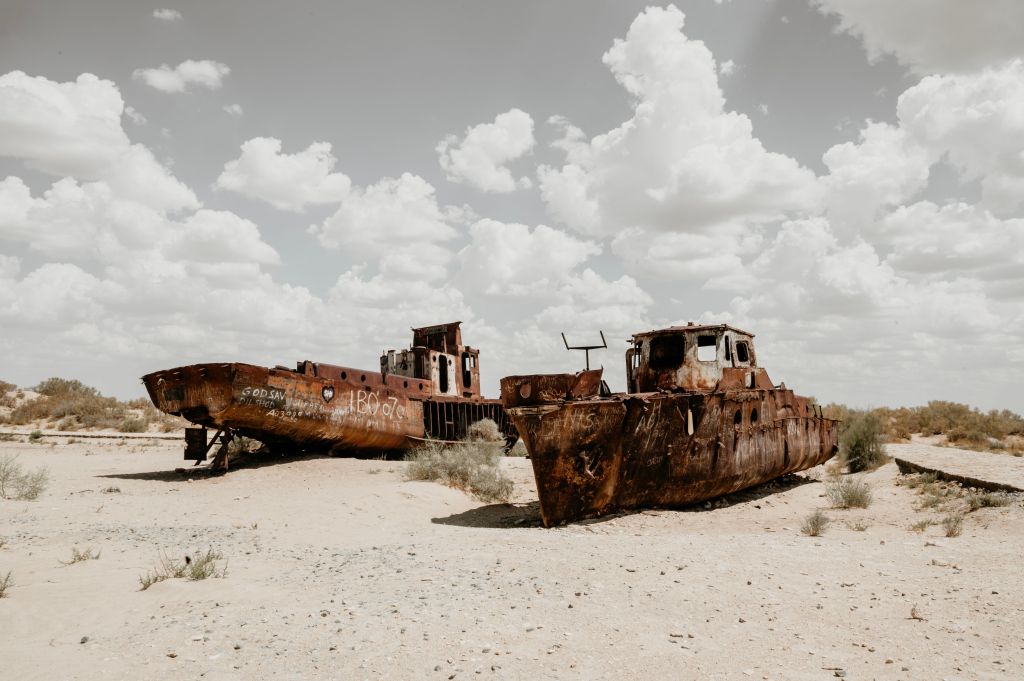
Fun Fact: In Switzerland, most people aren’t familiar with the Aral Sea, but in 2006, Swiss rapper Stress shot the music video for his song „On n’a qu’une terre“—a call to protect nature—at the abandoned shipyard in Muynak. Several of my friends recognized the location from that video when I told them I had traveled there.


 Flapsu's Travel Blog
Hinterlasse einen Kommentar