
After a tough trek through the rugged Himalayan terrain, we treated ourselves by heading south to the lush jungles of Chitwan National Park. Established in 1973, Chitwan was Nepal’s first national park and is located near the Indian border. Getting there isn’t too hard—it takes about 8 hours by bus from Kathmandu or 6 hours from Pokhara—but be ready for a bumpy ride! To help you plan your own trip, I will breakdown our 4-day itinerary in Chitwan National Park.
🚌 Day 1: Arrival and Tharu Village
We took a long, bumpy bus ride from Kathmandu to Baghmara, a small town just outside the national park. The journey took about 8 hours, but arriving in the warm, green lowlands felt like stepping into a new country.
That afternoon, we visited a nearby Tharu village to learn about the traditions of this indigenous community, who have lived in harmony with the jungle for generations.
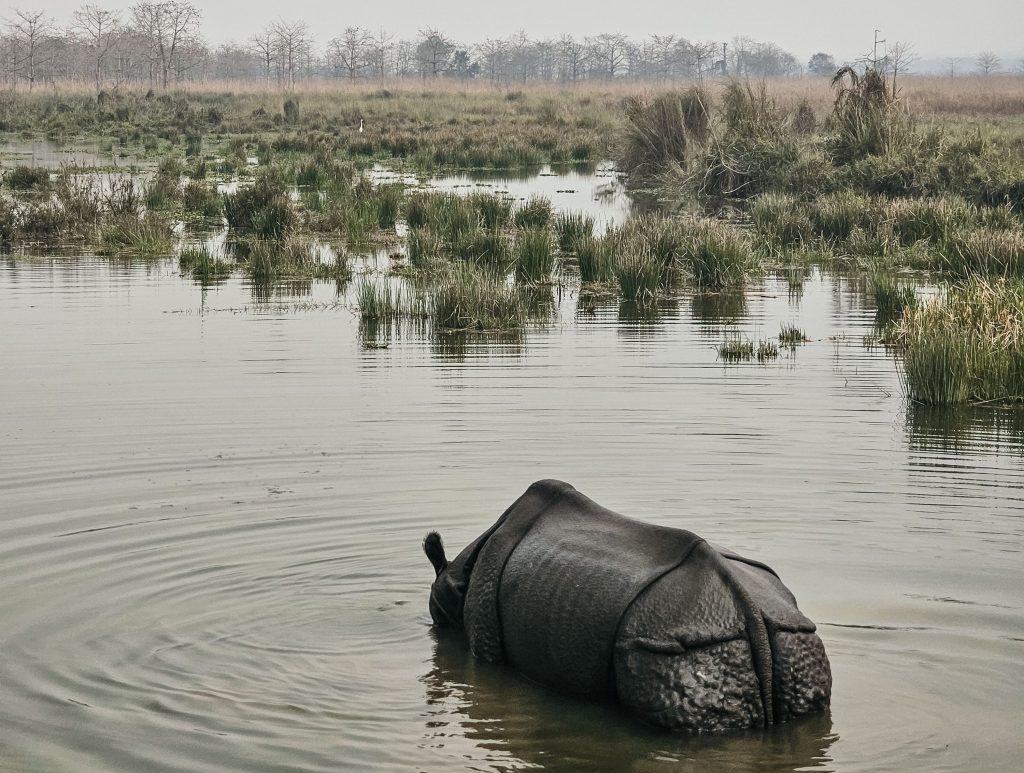
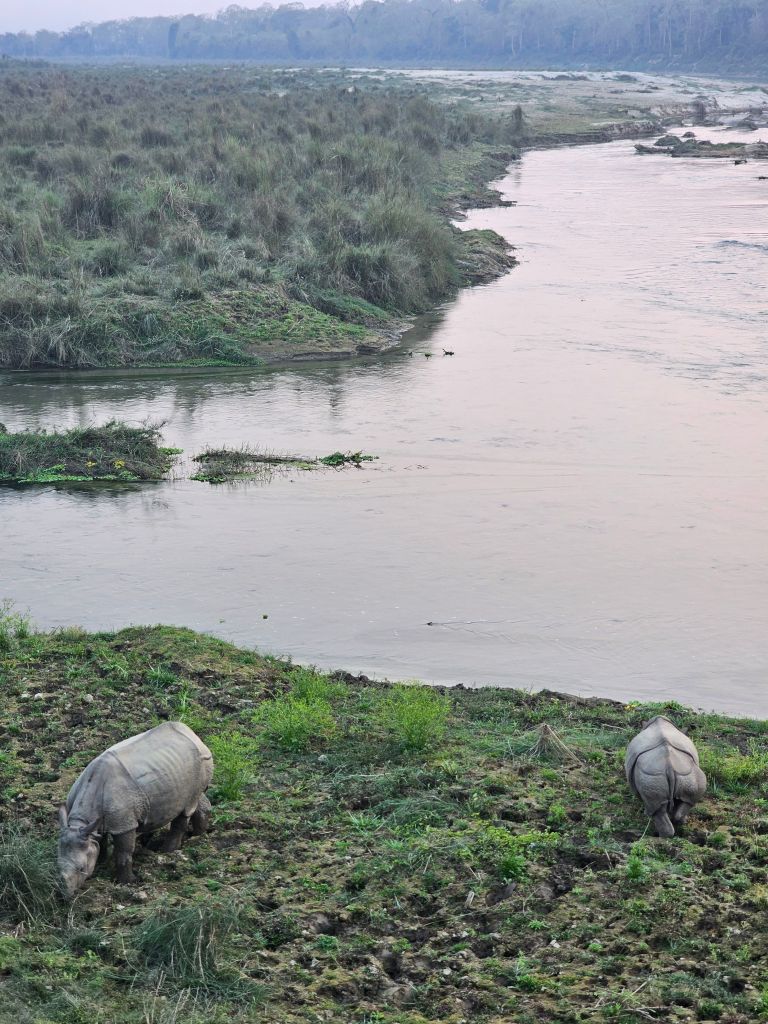
Later, we made our way to the „Sauraha Sunset Point“ where we were very lucky to spot two rhinos in the wild – a thrilling start to our Chitwan experience.
🛶Day 2: Birdwatching, Canoeing & Jeep Safari
Our second day began with a peaceful birdwatching walk, guided by a local expert. With over 560 bird species in Chitwan, it’s a haven for bird lovers. We spotted a variety of birds, including the red-vented bulbul, a few flycatchers, and the white-spotted kingfisher
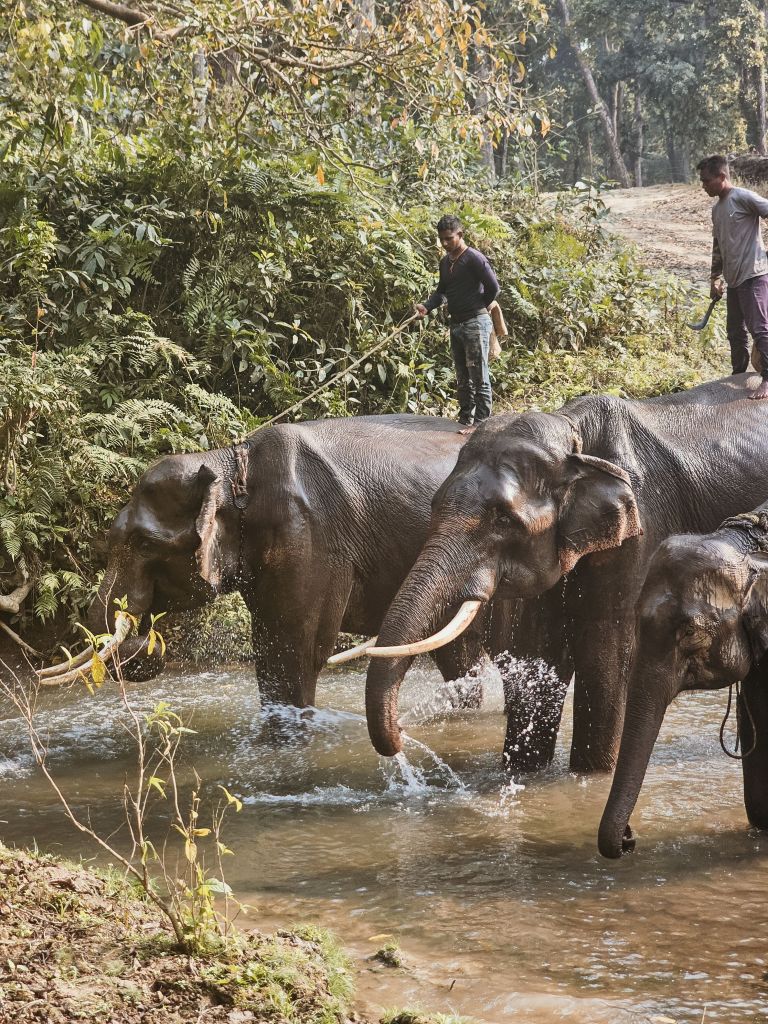
Afterwards, we floated down the Rapti River in a canoe, passing silently by riverbanks where crocodiles lounged in the sun. From the exit point we were able to walk to the elephant breeding center, where we learned about the efforts to protect and support these gentle giants.
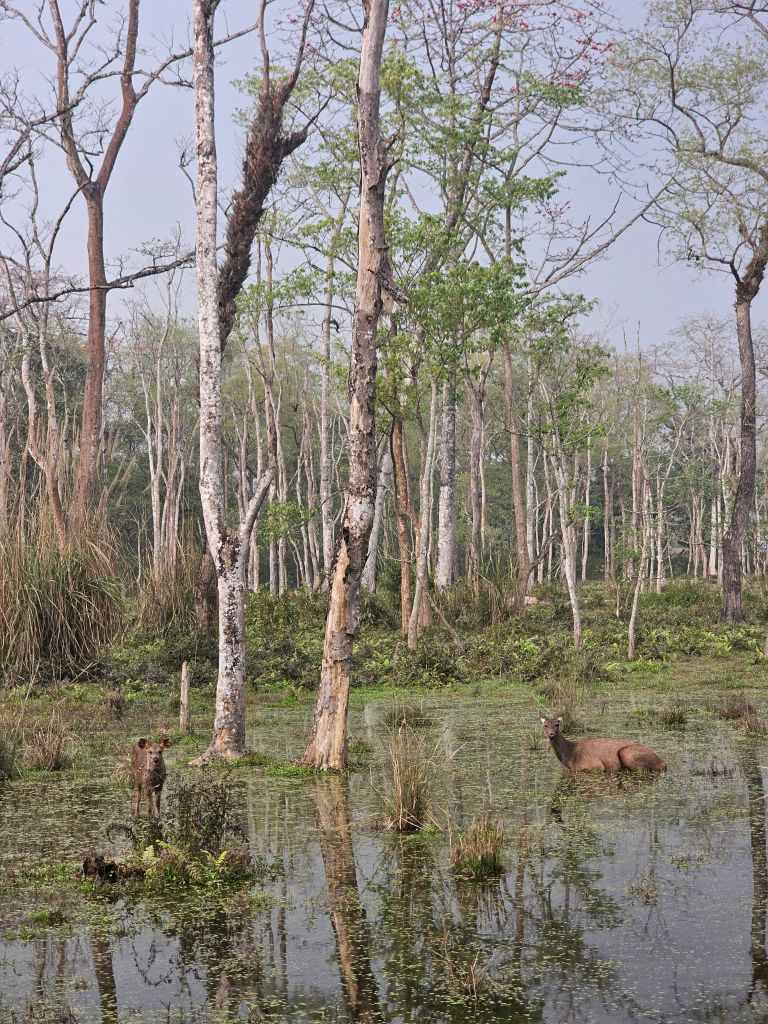
Later that day, we joined our first jeep safari. With over 700 species of wildlife in the park—including 68 species of mammals—every turn on the trail held potential. We saw herds of spotted deer, a wild boar, and, as the highlight of the day, a sloth bear crossing the path. Our guide was incredibly knowledgeable, pointing out tracks and subtle signs of animal presence that we would’ve otherwise missed. But unfortunately we were not lucky enough to see a bengal tiger or a leopard.
🦏 Day 3: Birdwatching & Jeep Safari
We started the morning with another round of birdwatching, and once again our guide impressed us with his sharp eye and deep knowledge. This time, we walked into a slightly different part of the village and were able to spot a giant hornbill.
In the afternoon, we went on a second jeep safari, this time with a different tour group. Unfortunately, the experience wasn’t as great. The jeep was overcrowded—14 people squeezed into a vehicle meant for 9—and the guide wasn’t very engaging. While we did see more rhinos, the packed conditions and lack of commentary made it feel more like a drive than an adventure.
👋Day 4: Departure
On our last morning, we packed up and headed back to Kathmandu. Chitwan offered a peaceful change of pace—lush, warm, and full of life. It was the perfect way to relax after our trekking expedition through the mountains.
🏨Accomodation
We stayed at Green Park Chitwan in Baghmara, and it couldn’t have been better. The rooms were clean and comfy, the staff was welcoming, and the buffet-style meals were full of flavor, especially the vegetarian paneer curries. When we were not on safari, the garden and pool area were the perfect spots to unwind.
We also want to give a shout-out to Alpine Club of Himalaya, the tour company that organized both our Chitwan itinerary and our Everest Base Camp trek. Everything ran smoothly, and we were once again very happy with their service.





 Flapsu's Travel Blog
Hinterlasse einen Kommentar