
Packing for the Everest Base Camp trek is all about efficiency and functionality. You want to bring everything you truly need—nothing more. There’s no reason to overpack or focus on appearances; what matters is that your gear works and is suited for the conditions you’ll face. The flight to Lukla allows a maximum of 15 kilograms, including your carry-on. If you’re hiring a porter, they typically carry up to 20 kilograms for two people, which means you can pack 10 kilograms to hand off and carry an additional 5 kilograms in your own daypack. Considering the trek lasts between 12 to 14 days, you have to be strategic about what you bring. In this post, I want to break down everything I packed for the EBC trek
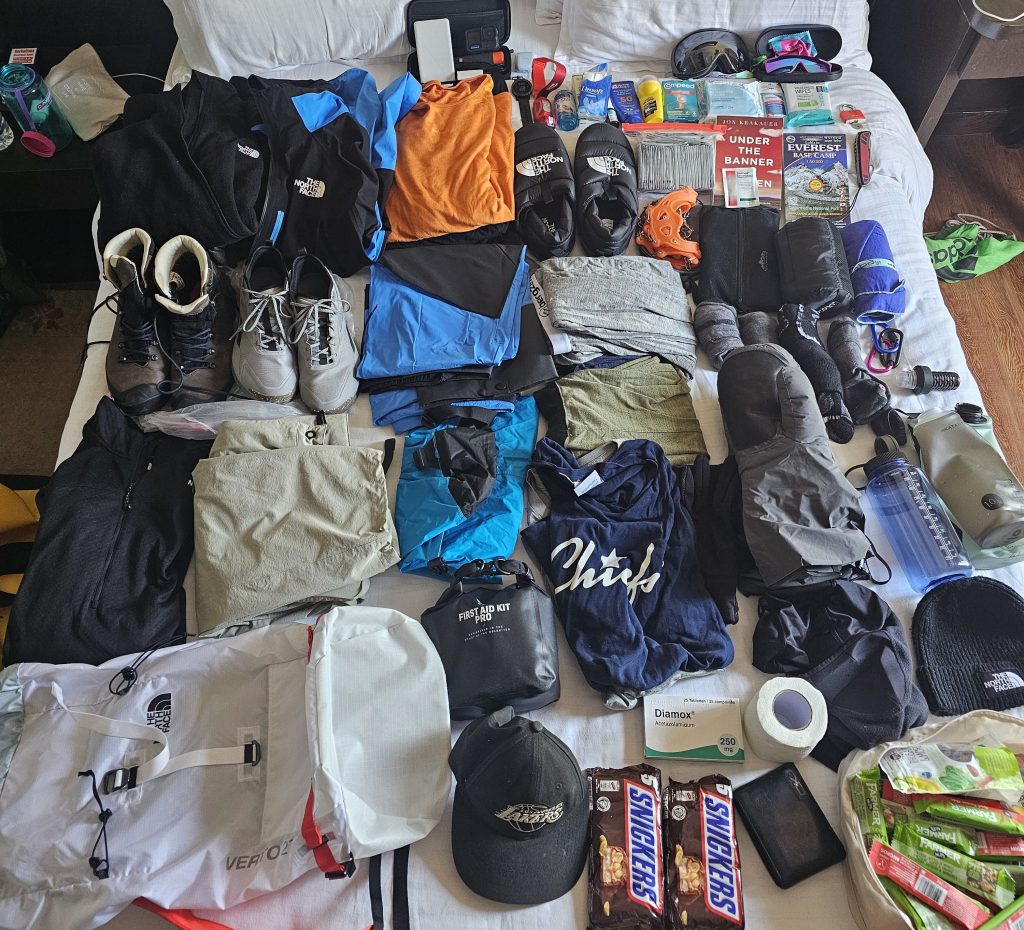
🏕️ Gear
- Sleeping Bag
(We rented a sleeping bag in Kathmandu, but unfortunately, the zipper was broken. If you have a good-quality sleeping bag at home, it’s best to bring it. Keep in mind, the sleeping bag alone will take up around 3 kg of your 15 kg weight limit.) - Sleeping Bag Inlay
(A sleeping bag inlay works as an additional layer to keep you warm and is a more hygienic option if you’re renting a sleeping bag.) - Spikes
(I bought them directly in Kathmandu for a few bucks.) - Trekking Poles
- Day Backpack (25–30L)
- Katadyn Waterfilter
- 2 Nalgene Bottles
🧥 Clothing
Footwear
- Hiking Boots
- Trekking Boots (Optional)
(Useful for some shorter Treks) - Hut Shoes (Optional, for teahouses)
(Due to the weight restrictions I left mine in Kathmandu, and I always had very cold feet.)
Base Layers
- 4 Pairs Merino Long Underwear
- 4 Pairs Merino Socks
- 3 Merino Longsleeve Shirts
- 1 Short Sleeve Shirt
Insulation & Outer Layers
- 1 Thin Midlayer
- 1 Thick Midlayer
- Down Jacket
- Convertible Trousers (Zip-off option)
- Ski Touring Trousers
- Rain Jacket
Accessories
- Thin Gloves
- Summit Gloves
- Sunglasses (UV protection)
- Buff/Neck Gaiter
- Sun Hat
- Wool Hat (Beanie)
🧼 Hygiene
- Toothbrush + Toothpaste
- Sunscreen (High SPF)
- Wet Wipes
- Deodorant
- Small Microfiber Towel
- Toilet Paper
🍫 Snacks
- Mars & Snickers Bars
- Dried Fruit, Energy Bars from Home
- Electrolyte Powder
🩺 Medical
- First Aid Kit
- Diamox (for altitude)
- Basic Medications
(e.g., ibuprofen or paracetamol for pain, loperamide for diarrhea, and something for mild stomach issues like an antacid)
📱 Tech & Electronics
- GoPro Hero 13
- Battery Bank (20,000 mAh)
- Chargers (USB + Wall Adapter)
- Earpods/Headphones
- E-Reader
- Headlamp
💳 Valuables & Money
- Passport (Required at checkpoints)
- Wallet with USD (for tipping guides/porters)
- Nepali Rupees (Approx. $100–200 USD per person for snacks, Wi-Fi, power, etc.)
- Permits (If trekking without a guide)
Before starting the trek, Thamel in Kathmandu is the best place to get your gear. Almost everything you need can be bought or rented at reasonable prices, and the quality is generally solid. If you find yourself in need of something very last minute, you can also pick up gear in Namche, though it’s better to be prepared ahead of time. When it comes to money, plan ahead as well. There are a few ATMs in Namche, but none above that point, so make sure bring enough cash. Your spending will depend on things like Wi-Fi, charging devices, or buying snacks along the way. If you’re on a guided tour, food and lodging are typically covered, but if you’re trekking independently, make sure to carry extra cash for that.


 Flapsu's Travel Blog
Hinterlasse einen Kommentar